


In 2026, mass marketing is fading and basic personalization is table stakes.
Enter hyper-personalization.
At Anderson Collaborative, we believe the future of digital marketing is about making every customer feel like your only customer. Thanks to AI, that is a practical strategy, not a fantasy.
What is hyper-personalization with AI in 2026?
Hyper-personalization uses real-time behavioral signals to tailor site content, email, SMS, and paid creative for each user. AI processes browsing, purchase, and engagement data fast enough to change messaging, offers, and landing pages on the fly while humans set strategy and guardrails.
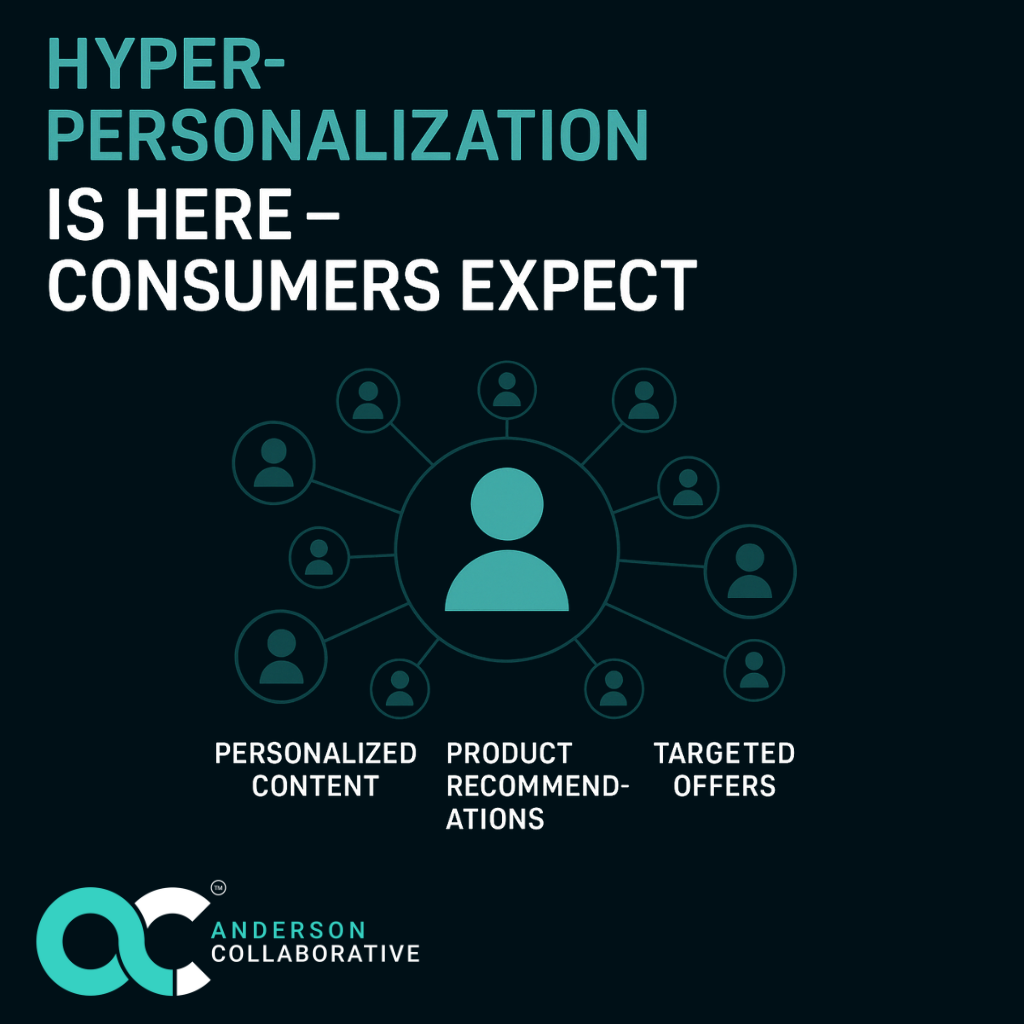
Hyper-Personalization in Practice
Hyper-personalization goes beyond using someone’s name in an email. It is about:
-
Understanding individual behaviors, interests, and real-time actions
-
Delivering tailored content across multiple touchpoints
-
Creating a seamless, relevant experience from first impression to final click
How AI Makes This Possible
AI analyzes massive data sets faster than any team ever could. That includes:
-
Website behavior
-
Purchase history
-
Social activity
-
Time of day, location, and device preferences
With this data, AI can:
-
Create custom landing pages in real-time
-
Recommend products or content before users even ask
-
Adjust messaging by tone, topic, and urgency per user
Real-World Applications
Ecommerce
AI personalizes product recommendations, offers, and dynamic pricing.
Email & SMS
Messages are sent based on individual behavior (not generic timelines).
Websites
Visitors see different homepages or headlines based on who they are or what they did last time.
Paid Ads
Hyper-targeted creative that reflects your last Google search, social behavior, or cart history.
The Payoff
Hyper-personalization drives higher engagement, better retention, and more conversions.
According to McKinsey, companies that personalize at scale see up to 40% more revenue growth than their competitors.
But remember: this only works when AI is paired with clear strategy and great creative.
Striking the Balance
Hyper-personalization can feel creepy if not done right. That is why it is key to:
- Use data ethically and transparently
- Offer value, not manipulation
- Keep humans in the loop for creativity and emotional intelligence
Frequently asked questions
What is hyper-personalization in marketing?
Hyper-personalization uses customer data and AI to tailor messages, offers, and experiences to smaller audience segments or individual users. It goes beyond basic personalization by reacting to behavior, intent, timing, and context.
How does AI help with hyper-personalization?
AI helps by analyzing large amounts of customer data and identifying patterns that would be hard to manage manually. Marketers can use those insights to recommend content, adjust messaging, and deliver more relevant experiences.
Why does hyper-personalization matter for brands?
Hyper-personalization matters because customers respond better when messages match their needs and timing. Used responsibly, it can improve engagement, reduce irrelevant outreach, and make marketing feel more useful.
Final Thoughts
You are no longer talking to a crowd. You are talking to individuals, and they expect you to know them.
With AI-powered hyper-personalization, you do not just speak to your audience.
You speak directly to the one who matters most.
Explore AI-enabled marketing solutions to operationalize personalization across channels, or let Anderson Collaborative help you implement this powerful strategy for your 2026 campaigns and beyond.